CONTENT
Introduction: Why Dirt Bike Engine Insights Matter
For international buyers sourcing off-road motorcycles, understanding the core structure of a dirt bike engine is crucial. Performance, reliability, and market adaptability all stem from how well an engine integrates with the rest of the vehicle. This technical guide shares key dirt bike engine insights to help global distributors, dealers, and procurement professionals make informed purchasing decisions.
What Makes a Good Dirt Bike Engine?
The best dirt bike engines deliver consistent torque, smooth acceleration, and compatibility with multiple terrains. But true engine performance also depends on matching the powertrain with supporting components—such as the cooling system, gearing, and chassis structure.
Other vital qualities include:
-
Stable idle and easy cold-starting
-
Adaptability to fuel quality in different countries
-
Long-term durability under off-road vibrations
This guide covers essential dirt bike engine insights, from mechanical design to component integration, aimed at helping buyers assess quality beyond just specs.
Engine Configuration: 2-Stroke vs 4-Stroke in Dirt Bikes
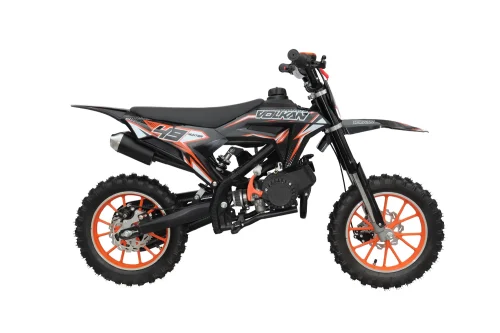
Volkan Moto’s engine lineup spans from 49cc to 190cc, offering both 2-stroke and 4-stroke options:
-
49cc models use 2-stroke engines: lightweight, responsive, and ideal for beginner bikes.
-
50cc–190cc models adopt 4-stroke architecture: smoother torque delivery, lower emissions, and better fuel efficiency.
Both engine types have their strengths:
-
2-Stroke: Higher power-to-weight ratio, simpler mechanics, faster acceleration
-
4-Stroke: More fuel-efficient, less noise and vibration, more durable for long rides
Our engines are carefully matched to application scenarios, whether it’s entry-level training, trail riding, or professional-grade off-roading.
Matching Dirt Bike Engine Sizes to Market Demands
Our lineup supports a range of displacement classes:
-
49cc (2-stroke): For entry-level or child-use dirt bikes.
-
90cc-110cc–125cc: Lightweight and low-maintenance, perfect for teens and recreational markets.
-
140cc–160cc: Balance of performance and handling, ideal for all-purpose off-road.
-
190cc: Professional use, oil-cooled, with enhanced stability for rugged terrain.
Each size is selected based on customer skill level, usage intensity, and geographic market trends.
Buyer Tip: If your market includes both beginner and mid-level users, consider stocking 110cc and 150cc models to meet broad demand without sacrificing engine reliability. |
Compression & Gear Ratios: Performance from Within
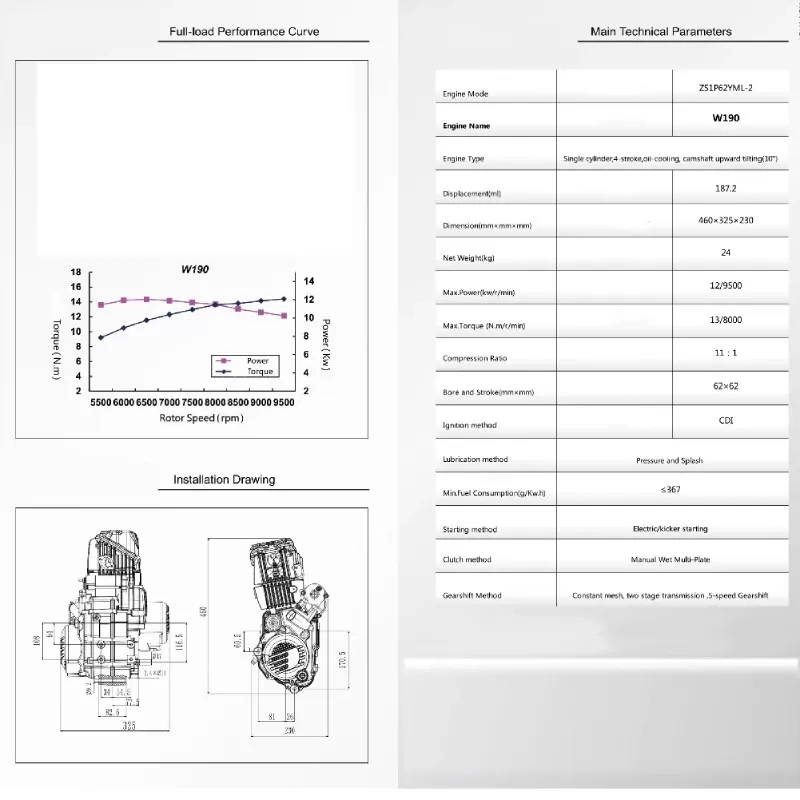
A critical dirt bike engine insight lies in how compression and gear ratios affect power delivery:
-
Higher compression = stronger output, better fuel efficiency, but requires good cooling and fuel quality.
-
Gear ratios determine torque behavior.
- Close-ratio: Better for acceleration and track use.
- Wide-ratio: More versatile across trail environments.
Compression ratios used in Volkan Moto engines are carefully optimized to provide quick throttle response while minimizing overheating risks in high-load situations.
Volkan Moto’s engine-gearbox pairings are pre-tested by suppliers like YinXiang and Zongshen, ensuring optimized gear behavior from factory.
|
Engineering Note: All transmission systems are hand-checked during final assembly. Our team ensures shift feel and gear spacing match the intended riding profile of each model class. |
Cooling Systems in Dirt Bike Engines: Air vs Oil

Volkan Moto offers both cooling types in our 140cc–160cc models, allowing market-specific customization.
Air-Cooled
- Simpler design, low maintenance
- More affordable for price-sensitive markets
- Easier to repair in remote locations
Oil-Cooled
- Better heat management for long rides
- Higher durability under heavy load
- More consistent performance in hot climates
Our 190cc engine is oil-cooled by default, meeting the demands of high-performance users.
Cooling components are protected with frame-integrated routing to avoid impact damage during riding. This ensures thermal systems maintain efficiency even in rough terrain.
Starting Systems: Electric vs Kick Start — What Works Best for Your Market

One of the most overlooked yet impactful engine features for global buyers is the starting mechanism. Dirt bikes typically offer either kick start, electric start, or a combination of both. Understanding the practical differences helps buyers match engine systems with their end users’ expectations and maintenance realities.
Kick Start: Mechanical Reliability
Kick start systems on carbureted, CDI-equipped models can operate independently of the battery under most conditions, as ignition power is generated by the magneto. This makes them highly reliable for markets where battery charging infrastructure is limited or maintenance intervals are long.
- Minimal electrical reliance
- Proven simplicity
- Fewer failure points in rugged environments
Electric Start: Ease and Accessibility
Electric start systems are increasingly favored in premium and mid-range models for their ease of use—particularly for younger riders, female users, or urban markets.
- Quick ignition, especially in cold starts
- Better suited for frequent stop-and-go use
- Improved rider accessibility
Many of Volkan Moto’s dirt bikes combine both systems to deliver starting flexibility in a range of real-world conditions.
➡️ Explore models with dual-start functionality to identify what best suits your region.
Intake and Exhaust Matching: Airflow Matters
Optimized airflow improves engine efficiency. Volkan Moto uses tailored air intake and exhaust systems:
- Air filters protect combustion chambers from dust-heavy environments.
- Headers and mufflers are tuned to match engine torque characteristics.
- Pipe bends and lengths are calibrated to reduce backpressure and improve scavenging.
These adjustments contribute to better dirt bike engine insights—balancing responsiveness and long-term performance.
Our product range is built with modular compatibility in mind, enabling international buyers to tailor specs based on terrain, climate, and rider expectations—with full engineering support from our team.
Chassis and Suspension Compatibility: Power Means Nothing Without Control
A good engine is only as effective as the frame and suspension system that supports it. At Volkan Moto, we engineer every dirt bike as a unified system, ensuring that the engine’s power delivery is matched by structural integrity and handling stability.
Frame-Engine Integration
Each frame design is developed in-house to support the stress levels generated by its corresponding engine class:
- 125cc and below: Lightweight frames optimized for maneuverability and beginner control
- 140cc–160cc: Reinforced tube geometry to withstand mid-level torque loads during jumps and uneven trails
- 190cc: High-rigidity construction with thicker weld points and gusseting to support aggressive off-road riding and high-output engine performance
Engine-Informed Suspension Geometry
Rather than selecting suspension randomly by size, we tune the suspension mounting points and fork angle based on engine weight, expected torque response, and rider impact profile. This ensures that:
- The engine’s torque doesn’t overwhelm the suspension
- Ground contact remains predictable under throttle
- Handling and cornering feel proportional to engine responsiveness
|
🎯 Engineering Insight: Volkan Moto’s engineering process doesn’t just test engine power—we analyze how that power interacts with every point of the chassis and suspension under real trail conditions. |
This full-system alignment ensures that every Volkan Moto dirt bike doesn’t just run—it rides the way it was engineered to.
Durability and Component Matching: Why Engineering Consistency Matters
In off-road motorcycles, durability depends on how well components interact—not just engine strength. A high-output engine can fail if paired with an undersized frame or misaligned transmission.
Volkan Moto ensures:
- Engine-to-frame compatibility
- Torque-appropriate suspension geometry
- Pre-tested final drive setups
For example, our 160cc dirt bike uses reinforced suspension and a drive ratio fine-tuned for trail use. Gear lash and chain tension are measured under simulated load to ensure consistent drive feel.
Why This Matters to Global Buyers
- Lower warranty risks
- Higher end-user satisfaction
- More consistent post-sale service
- Reduced maintenance overhead for dealers
Volkan Moto delivers complete dirt bike engine systems, not just isolated powerplants.
➡️ Contact our team to discuss configurations that suit your market.
Key Engineering Practices That Inform Dirt Bike Engine Insights
To achieve lasting durability in off-road motorcycles, Volkan Moto applies a series of technical checks and design validations, which offer critical dirt bike engine insights for professional buyers:
- Load simulation testing on all major connection points between engine and frame
- Thermal balance analysis across the powertrain to prevent localized overheating
- Vibration testing under off-road acceleration scenarios to ensure bolt integrity and prevent fatigue failure
- Drivetrain alignment calibration, ensuring gear engagement tolerances are kept within optimal ranges
These engineering checkpoints aren’t just technicalities—they’re what make the difference between a product that survives light use and one that thrives under real off-road demands.
By prioritizing these engineering practices in product development, Volkan Moto helps procurement teams make informed, market-ready sourcing decisions.
|
📌 Buyer Tip: When evaluating dirt bike engine options, consider asking how the engine has been matched to the chassis and suspension. A supplier that understands full-system dynamics will often be more capable of delivering consistent performance in your target market. |
How to Apply These Dirt Bike Engine Insights When Comparing Suppliers
If you’re refining your off-road product lineup or sourcing from new suppliers, these dirt bike engine insights can help you make better-aligned decisions.
- Consider how the engine’s cooling type (air-cooled or oil-cooled) aligns with the expected terrain, climate, and rider preferences in your target markets.
- Look beyond engine brand—evaluate how well the engine integrates with the chassis geometry, suspension setup, and drivetrain components to ensure long-term performance.
- Align optional configurations like start type, sprocket size, or torque curve with the needs of your product segments, whether for beginner riders or performance-focused models.
Volkan Moto works closely with buyers to recommend configurations that match local usage conditions and commercial strategies.
|
✅ Did You Know?
Many engine-related performance issues stem from system mismatches rather than the engine itself. Strategic planning with these insights can significantly improve product lifespan and user satisfaction. |
Conclusion: Apply These Dirt Bike Engine Insights to Your Sourcing Strategy
Choosing the right dirt bike engine goes far beyond checking displacement or horsepower. It’s about understanding how the engine interacts with every surrounding component—from gear ratios to frame geometry to cooling performance. These dirt bike engine insights help overseas distributors and procurement managers avoid common sourcing mistakes and select models that offer long-term durability, responsive performance, and after-sales consistency.
At Volkan Moto, we believe smart sourcing starts with a complete view of the vehicle system. That’s why our engineers ensure each engine is not only powerful but also matched to the dirt bike’s structural design, usage environment, and target performance level. Whether your product line serves off-road adventure markets or rental fleets in demanding terrain, we offer dirt bike engine configuration guidance to support your local market needs.
|
Final Reminder: Always ask not only what engine a bike uses, but how well that engine is matched to the total vehicle system. That’s where real performance—and business value—emerges. |
➡️ Talk to a Volkan Moto Advisor to put these dirt bike engine insights into action for your sourcing needs.